Power BI Consulting Services: What Businesses Should Expect
Power BI consulting services help businesses move from scattered reports and spreadsheet workarounds to dashboards, data models, and reporting processes that people can trust. The value depends on scope, business participation, and the consultant's ability to connect technical work to real decisions.

What Power BI consulting services include
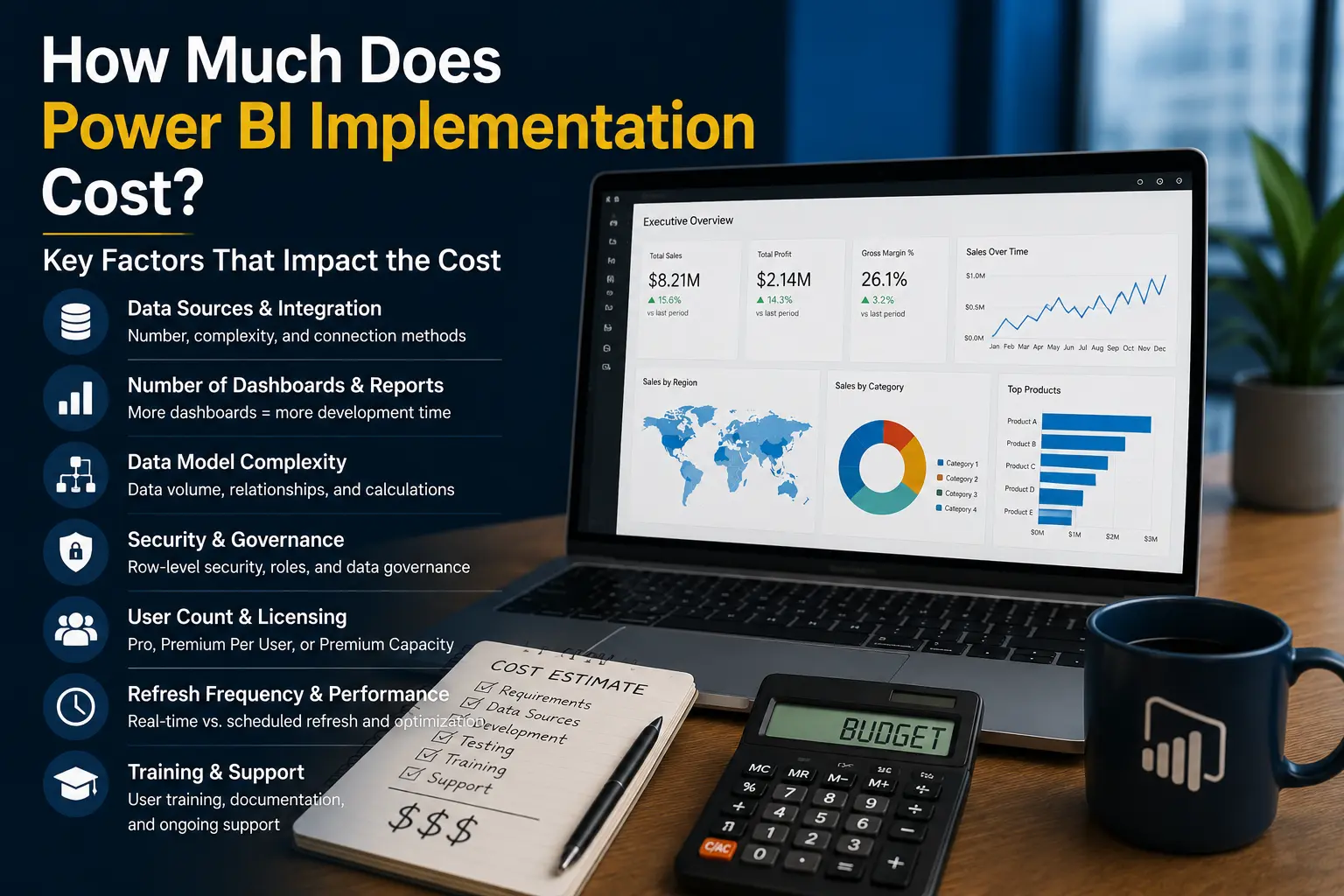
Power BI consulting services can range from a focused dashboard project to a broader business intelligence consulting engagement. At the narrow end, a consultant may build a report, improve a slow model, or automate a recurring management pack. At the broader end, the work may include data architecture, governance, security, documentation, training, and ongoing support.
A useful engagement should start with the business problem. An operations leader may need to see backlog and service-level exceptions daily. A finance leader may need consistent margin reporting across locations. A business owner may need an executive dashboard that replaces several manual Excel files. The consultant's job is to translate that need into a reporting solution that can be maintained.
Common Power BI consulting services include:
- Discovery and requirements gathering with business stakeholders.
- Assessment of data sources, exports, spreadsheets, databases, and applications.
- Data cleaning and transformation using Power Query, SQL, or a data pipeline.
- Data modeling, relationships, measures, and reusable KPI definitions.
- Power BI dashboard development and report design.
- Security setup, workspace structure, app deployment, and governance guidance.
- Power BI optimization for slow reports, refresh issues, and model bloat.
- Documentation, user training, handoff, and post-launch support.
If you want a deeper explanation of the consultant role itself, see what a Power BI consultant does. For broader rollout planning, our Power BI implementation guide covers process, licensing, data, and deployment considerations.
If you are comparing options for outside help, the Power BI consulting service page summarizes how Willduet supports reporting, dashboard, and implementation work.
Typical Power BI consulting phases and deliverables
The exact process depends on scope, but most successful projects follow a similar pattern. The work should not jump straight to visuals unless the data, KPIs, users, and security are already clear.
Discovery and requirements gathering
Discovery should identify the decisions the reporting will support. A good consultant asks who uses the dashboard, what questions it must answer, which metrics are disputed, what current reporting process exists, and which decisions are delayed by poor data.
Data-source assessment and integration
SMB reporting often depends on data from accounting systems, CRMs, ERPs, operations tools, databases, and spreadsheets. The consultant should identify whether Power BI can connect directly, whether a database or warehouse is needed, and where manual exports create risk. Our article on databases vs data warehouses explains when a reporting layer becomes useful.
Data modeling and architecture
Data modeling is where many projects succeed or fail. A thin visual layer on top of messy data may work for one report but usually breaks as reporting expands. A consultant should create reusable dimensions, clear relationships, documented measures, and models that can support future dashboards.
Dashboard and report development
Report pages should reflect the audience. Executives need summary, trends, targets, and exceptions. Managers need filters and drill paths. Analysts need enough detail to investigate. For dashboard-specific planning, see our guide to Power BI dashboard development services.
Security, governance, deployment, and support
Power BI consulting should not stop at a working `.pbix` file. Production reporting needs secure access, workspace structure, refresh monitoring, deployment discipline, and a support path. Without these pieces, reports can become difficult to trust after the first release.
Security decisions include who can view reports, who can edit models, whether row-level security is needed, whether exports should be restricted, and how access requests are handled. Governance decisions include naming conventions, certified datasets, ownership, documentation, and how changes move from development to production. These topics are covered in more detail in our posts on Power BI security best practices and Power BI governance.
Performance optimization is also part of a serious engagement. Slow reports reduce adoption. A consultant may need to reduce model size, rewrite DAX measures, change DirectQuery usage, simplify visuals, improve relationships, or adjust refresh design. For existing slow dashboards, review our Power BI performance optimization guide.
What the client must provide
Consulting is not a handoff where the provider disappears and returns with a perfect dashboard. The client still owns business meaning. A consultant can build the model and reporting process, but the business must provide the context needed to make it correct.
- Access to source systems or sample exports.
- Current reports, spreadsheets, and known pain points.
- Definitions for KPIs such as revenue, margin, active customers, backlog, utilization, and churn.
- Subject matter experts who can validate numbers and business rules.
- Security requirements by role, location, department, or user group.
- Timely feedback during prototypes and user-acceptance testing.
- A named owner who can make scope and priority decisions.
When the client cannot provide these inputs, the project usually slows down or produces dashboards that look finished but are not trusted. The strongest projects treat validation and ownership as part of the work, not as afterthoughts.
How to evaluate a Power BI consultant
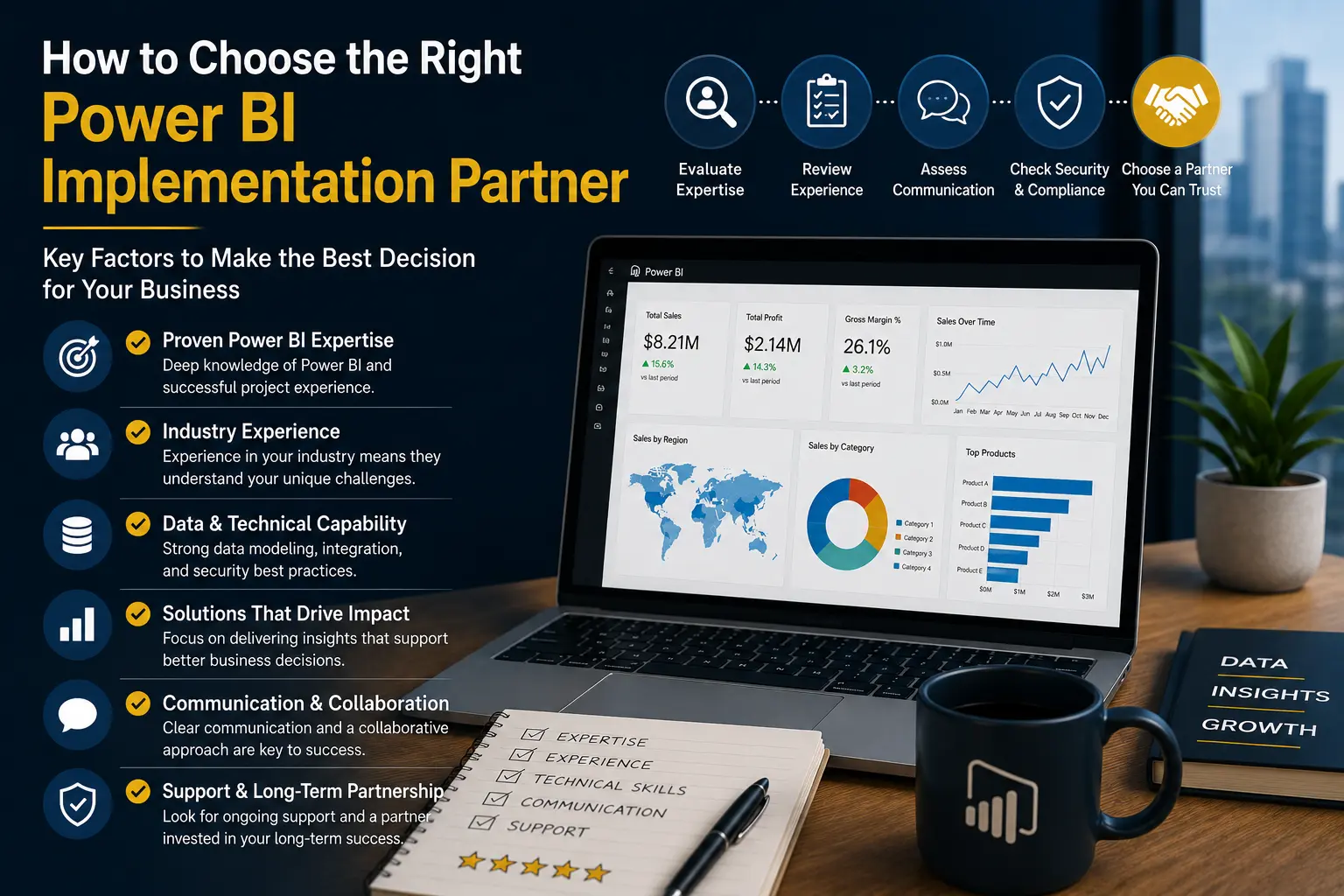
Businesses should evaluate more than visual design. A Power BI consulting company should be able to explain how it handles messy data, unclear KPIs, performance problems, security, documentation, and support. Good questions expose whether the provider is thinking about long-term reporting quality or only the first dashboard.
Questions to ask before signing an agreement
- How will you confirm the business requirements before development starts?
- What assumptions are included in the scope?
- How will data quality issues be surfaced and resolved?
- Will the model be reusable for future reports?
- How will security and access be configured?
- How will the dashboard be validated before launch?
- What documentation, training, and handoff are included?
- What happens after launch if users find issues or need changes?
Warning signs when selecting a provider
Be cautious if a provider promises a fixed result before seeing the data, focuses only on screenshots, avoids questions about KPI definitions, ignores security, or cannot explain how the model will be maintained. Also be cautious if every request is treated as custom work with no discussion of standards, governance, or reusable design.
Consulting is appropriate for an SMB when reporting is important enough to require reliability but the company does not have the internal bandwidth or specialized experience to design the full solution. It is also appropriate when an internal team exists but needs outside help for architecture, optimization, governance, or delivery speed.
Need an objective plan for Power BI reporting?
Willduet helps SMBs scope Power BI consulting services, build dashboards, improve models, automate reporting, and support implementation.
Conclusion: power bi consulting services
Power bi consulting services should give a business more than a report file. A good engagement clarifies requirements, reviews data sources, builds a reliable model, develops useful dashboards, addresses security, improves performance, documents the solution, and prepares users to adopt it. For SMBs evaluating outside help, the best consultant is the one who can explain both the technical work and the business responsibilities required for a successful outcome.
Frequently asked questions
What do Power BI consulting services usually include?
They usually include requirements gathering, data-source review, data modeling, dashboard development, security, deployment, performance optimization, documentation, training, and support.
When should an SMB hire a Power BI consultant?
An SMB should consider consulting when reporting is manual, KPIs are inconsistent, dashboards are slow, data is spread across systems, or leadership needs a trusted reporting process.
What should a client provide during a consulting project?
The client should provide source-system access, example reports, KPI definitions, business owners, security requirements, timely feedback, and a clear decision-maker for scope questions.
How do you evaluate a Power BI consultant?
Evaluate their discovery process, data modeling ability, performance experience, governance knowledge, documentation habits, communication style, and support approach.
Do Power BI consulting services include training?
They often should. Training may include report-consumer guidance, handoff for internal owners, documentation of KPI definitions, and support processes for future changes.
Can a consultant fix an existing Power BI environment?
Yes. Consulting can include performance tuning, model cleanup, dashboard redesign, governance improvements, security review, and refresh troubleshooting.