What Does a Power BI Consultant Do?
A Power BI consultant helps a business turn disconnected data, manual reporting, and unclear KPIs into dashboards that leaders can use. The role is part technical specialist, part reporting architect, and part business translator.

What a Power BI consultant does for a business
A Power BI consultant helps companies plan, build, fix, and scale Power BI reporting. That sounds broad because successful reporting touches several areas: business requirements, data sources, modeling, dashboard design, security, refresh reliability, performance, and user adoption.
The best consultants do not start by asking what chart you want. They start by understanding the business decisions the report needs to support. A finance leader may need margin visibility by customer segment. An operations director may need daily exceptions by location. A founder may need a compact executive dashboard that replaces five manually updated spreadsheets.
From there, the consultant translates the business need into a practical reporting design. That includes deciding which data sources are needed, how the data should be cleaned, which KPIs need formal definitions, what model structure will support future reporting, and how users should access the finished dashboards.
Common Power BI consulting services
Power BI consulting services can be narrow or broad depending on the company’s situation. Some businesses need a single executive dashboard. Others need a full Power BI implementation with data engineering, governance, security, and training.
Requirements gathering
A consultant should clarify who will use the report, what decisions they need to make, which KPIs matter, how often data must refresh, and what level of detail is required. This avoids building dashboards that look polished but do not answer the right questions.
Data discovery and cleanup
Many SMB reporting problems come from data scattered across accounting software, CRM systems, spreadsheets, operations tools, and databases. A consultant reviews those sources, identifies gaps, and recommends a reliable path for reporting automation.
Data modeling
A clean semantic model is what separates a scalable Power BI solution from a fragile report file. Good modeling creates reusable measures, consistent dimensions, clear relationships, and a foundation for future dashboard development.
Dashboard development
Power BI dashboard development includes page layout, KPI cards, trends, filters, drillthrough pages, exception views, and mobile or executive views where needed. The design should make business performance easy to scan without hiding important context.
Performance optimization
If reports take too long to open, users stop trusting them. A consultant can improve model size, DAX measures, visual design, refresh strategy, and DirectQuery usage. For a deeper technical view, see our guide on optimizing slow Power BI reports.
Security and governance
Consulting should also cover who can see what. That may include workspace structure, app distribution, row-level security, permissions, certified models, and governance rules. These topics become especially important when reports include payroll, customer, sales, or financial data.
Power BI consultant vs report developer
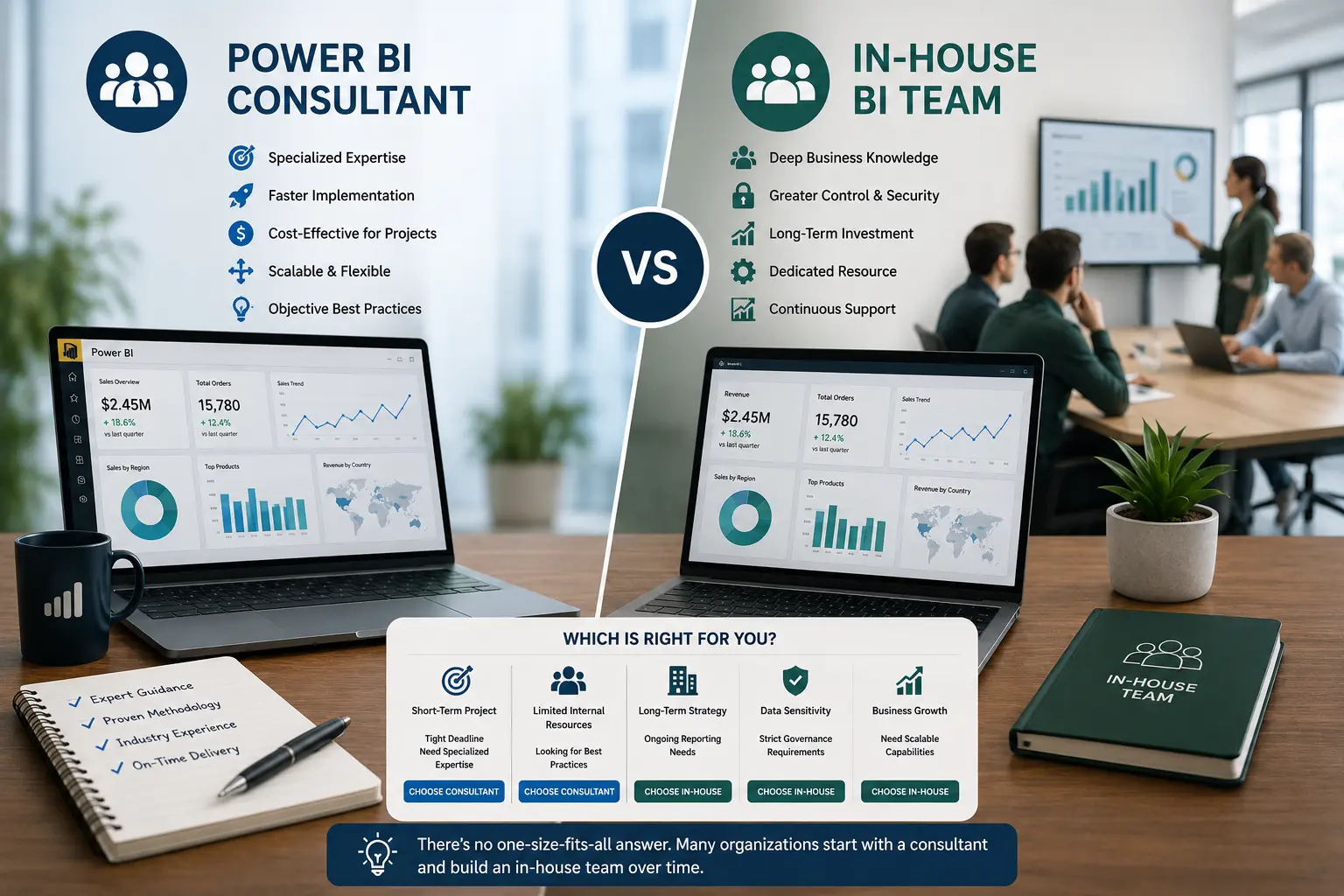
This does not mean a report developer is less valuable. It means the roles solve different problems. If your requirements are clear and the data model already exists, report development may be enough. If the business is still defining the reporting system, a consultant is usually more useful.
When to hire a Power BI consultant
Hiring a Power BI consultant makes sense when reporting problems are affecting management decisions, not just when a dashboard needs a visual refresh. The signs usually show up in meetings: leaders debate whose spreadsheet is right, managers wait for manual reports, and analysts spend more time cleaning data than explaining performance.
- Reports are built manually in Excel every week or month.
- Different departments define the same KPI differently.
- Power BI reports are slow, confusing, or hard to maintain.
- Executives need a trusted view of sales, finance, operations, or service performance.
- The company is planning a Power BI implementation and wants to avoid rework.
- Security requirements are unclear or sensitive data is broadly shared.
- The internal team needs help with modeling, DAX, Power Query, governance, or deployment.
For example, a growing services company may have revenue data in accounting software, sales activity in a CRM, and project delivery data in spreadsheets. A consultant can help define the reporting model, automate refreshes, and build dashboards that show revenue, pipeline, utilization, and margin in one place.
A distributor may need inventory, orders, and customer performance reporting. The work is not just connecting tables. The consultant needs to understand how business users think about fill rate, backorders, margin, product categories, and exception reporting.
What a good consulting engagement should include
A strong engagement should have a clear scope, but it should not be limited to producing screenshots. The deliverables should help the business operate the reporting system after the initial work is complete.
- A documented understanding of reporting goals and users.
- An inventory of data sources and known data quality issues.
- A model design that supports current and near-term reporting needs.
- Dashboard pages built around decisions, exceptions, and KPI accountability.
- Refresh and deployment setup that the business can support.
- Security decisions documented clearly.
- Training or handoff for report consumers and internal owners.
If you are evaluating a broader rollout, read our Power BI implementation guide, implementation cost guide, and go-live checklist.
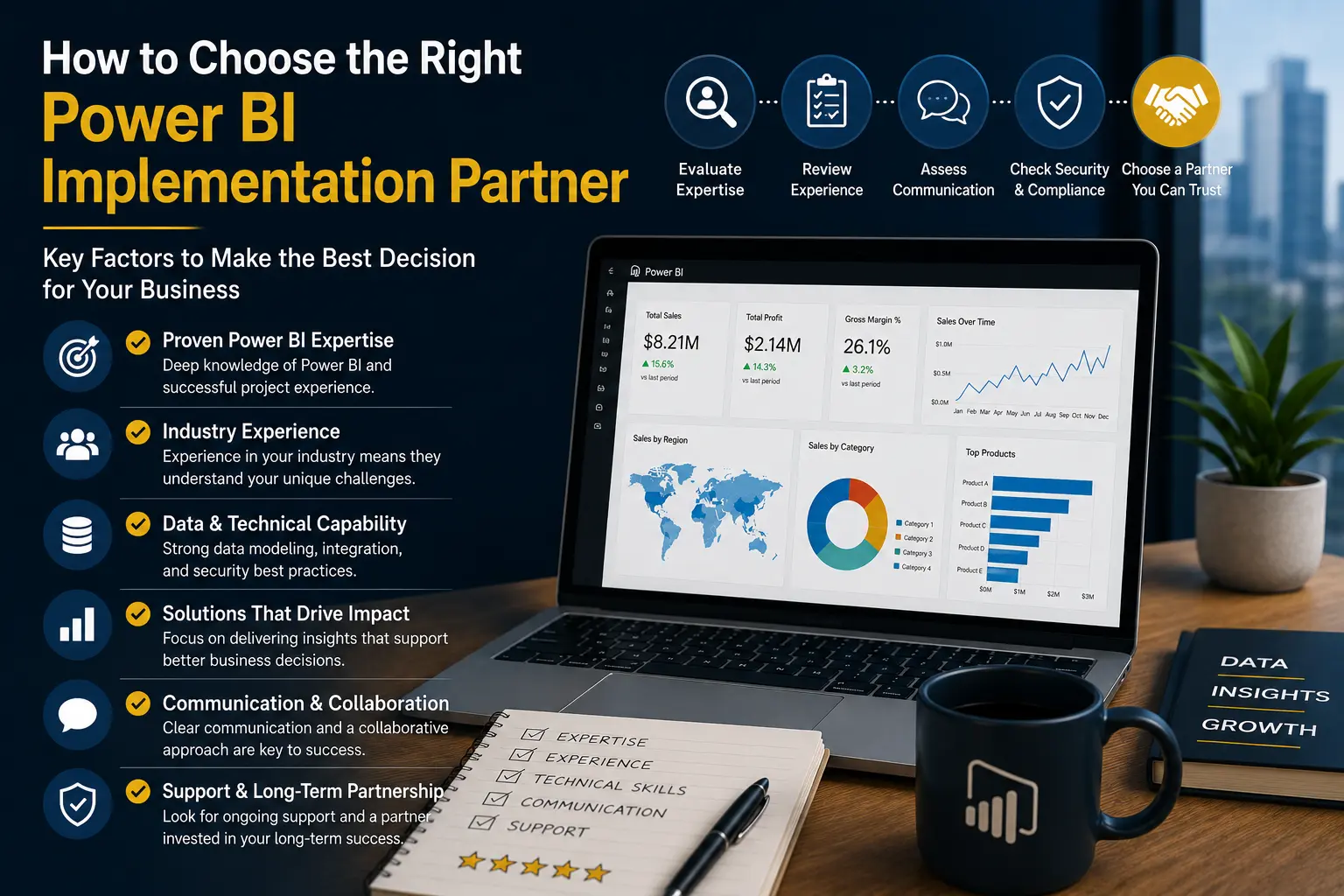
For a buyer-focused view of scope, deliverables, and provider evaluation, see what businesses should expect from Power BI consulting services.
Need help turning reporting into a usable system?
Willduet helps SMBs with Power BI consulting, dashboard development, reporting automation, implementation, and optimization.
Conclusion: power bi consultant
A power bi consultant helps a business move from scattered reports to a more reliable reporting system. The work can include dashboard development, data modeling, Power BI implementation, performance optimization, governance, security, and user adoption. The real value is not simply building a report; it is helping leaders trust the numbers and use them consistently.
Frequently asked questions
What does a Power BI consultant do?
A Power BI consultant helps businesses design, build, improve, and govern Power BI reporting. Work can include requirements gathering, data modeling, dashboard development, performance optimization, security, training, and implementation support.
When should a business hire a Power BI consultant?
A business should consider hiring a consultant when reporting is manual, dashboards are slow, KPIs are inconsistent, data is spread across systems, or the internal team needs specialist Power BI implementation experience.
Is a Power BI consultant different from a report developer?
Yes. A report developer may focus mainly on visuals and report pages. A consultant should also understand business requirements, data architecture, semantic models, governance, security, adoption, and long-term reporting maintainability.
Can a Power BI consultant help with Excel reporting?
Yes. Many consulting projects start by replacing recurring Excel reporting with automated Power BI dashboards, governed models, scheduled refreshes, and clearer KPI definitions.
What should I prepare before speaking with a consultant?
Prepare examples of current reports, data sources, pain points, target users, important KPIs, refresh needs, and any security requirements. This helps scope the work realistically.
Does every company need ongoing Power BI consulting?
No. Some companies need a short implementation or optimization project. Others need ongoing support for governance, dashboard development, reporting automation, and roadmap execution.